What Is AEO (Answer Engine Optimization) and How Does It Work?

Search has always been about getting found. For decades, that meant ranking on Google, earning clicks, and driving traffic to your website. But that model is changing faster than most businesses realize, and the companies that adapt earliest will hold an outsized advantage over those that wait.
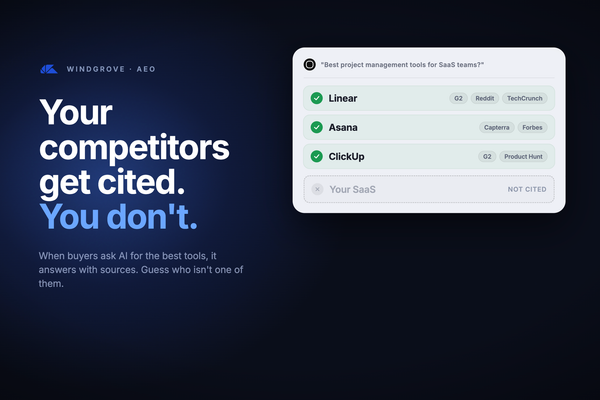
The core shift: AI-powered answer engines like ChatGPT, Perplexity, Google AI Overviews, Gemini, and Claude are no longer just tools people use to draft emails. They are becoming the first stop for business research, vendor evaluation, and purchasing decisions. When a potential client types a question into one of these platforms, they receive a synthesized answer, often without ever visiting a website. If your brand is not part of that answer, you are invisible at the most critical moment in the buyer journey.
This is where Answer Engine Optimization (AEO) comes in.
This guide covers what AEO is, how it works mechanically, how it differs from traditional SEO, and why the window to act is narrower than most businesses think.
What Is AEO (Answer Engine Optimization)?
Answer Engine Optimization (AEO) is the practice of structuring and positioning your content so that AI-powered answer engines cite your brand when responding to relevant queries. Rather than optimizing for a position on a search results page, AEO optimizes for inclusion in a synthesized AI response, the kind of direct, conversational answer that ChatGPT, Perplexity, Google AI Overviews, and similar platforms deliver to users.
The distinction is significant. Traditional search optimization earns you a link. AEO earns you a citation inside the answer itself, meaning your brand becomes part of the information a user receives, not just an option they might click on.
Key definition: AEO is not a replacement for SEO. It is an extension of it, applied to a new class of search interface where the engine synthesizes answers rather than listing links.
What "Answer Engines" Actually Are
An answer engine is any AI system that interprets a natural language query and generates a direct, synthesized response. This includes:
ChatGPT (OpenAI): the dominant AI search platform, processing over 2.5 billion prompts per day
Perplexity AI: a search-native AI tool that cites sources inline and is growing rapidly among research-oriented users
Google AI Overviews (AIO): Google's AI-generated summaries that now appear at the top of search results for over 25% of queries
Gemini (Google): Google's conversational AI assistant, deeply integrated with Google Workspace
Claude (Anthropic): increasingly used for research, writing assistance, and professional queries
Microsoft Copilot: embedded across Microsoft 365 and Bing, making it significant for enterprise B2B audiences
Each of these platforms pulls from different data sources, weights authority signals differently, and serves a slightly different user base. Effective AEO accounts for all of them, not just one.
How the Search Market Is Shifting
The numbers behind this shift are significant enough that they warrant attention from any business that relies on inbound discovery.
60% of searches in the US and EU now result in zero clicks due to AI Overviews and featured snippets answering the query directly on the results page. The average click-through rate for a website ranking first on Google dropped from 0.73 to 0.26 between March 2024 and March 2025, a 64% reduction in less than 12 months. Meanwhile, according to Conductor's 2026 AEO Benchmarks Report, AI referral traffic is growing by roughly 1% of total web visits per month across major industries.
That growth rate may sound modest until you consider the quality of the traffic it represents.
AI Traffic Converts Differently
Traffic arriving from AI citations is not equivalent to organic search traffic. It is materially better qualified. When an AI engine recommends your brand in response to a specific query, the user arrives having already received a pre-qualified endorsement. They are not browsing. They are evaluating.
The conversion rate difference is stark: research shows AI-referred traffic converts at approximately 14.2% on average, compared to 2.8% from traditional Google organic search. That is a 5x difference in conversion performance from the same discovery moment.
For B2B service providers, this matters enormously. A prospective client asking an AI "which agencies specialize in AEO for professional services firms" and receiving a recommendation is a fundamentally different lead than someone clicking a generic search result. The intent is more specific, the trust is higher, and the sales cycle is shorter.
The Buyer Journey Has Compressed
HubSpot's Consumer Trends Report found that 72% of consumers plan to use AI-powered search for purchasing decisions more frequently. Answer engines are compressing the traditional buyer journey by delivering synthesized comparisons, recommendations, and vendor shortlists in a single response. For B2B buyers, who already conduct extensive pre-purchase research before engaging a vendor, this compression is accelerating the moment of shortlist formation.
The practical implication: the brands that appear in AI-generated answers are being shortlisted before a buyer ever reaches a company website. Those that do not appear are being screened out at the same stage.
How AEO Works: The Core Mechanics
AEO is not a single tactic. It is a system of overlapping signals that, together, tell AI engines that your brand is a credible, citable authority on a given topic. Understanding the mechanics helps explain why some brands appear consistently in AI answers while others with strong traditional SEO rankings do not.
1. Content Structure and Answer-First Formatting
AI engines extract information differently from how Google's crawler indexes it. They look for clear, direct answers to specific questions, not pages that bury the answer in the fifth paragraph. Content formatted for LLM extraction is three times more likely to be cited than content that is not.
Practically, this means:
Leading each section with a concise, direct answer (40-60 words) before expanding on the detail
Using clear heading structures that mirror how people phrase questions
Writing self-contained sections that make sense when extracted in isolation, without needing surrounding context
Including structured FAQ content that maps directly to the queries your audience asks
2. Schema Markup and Structured Data
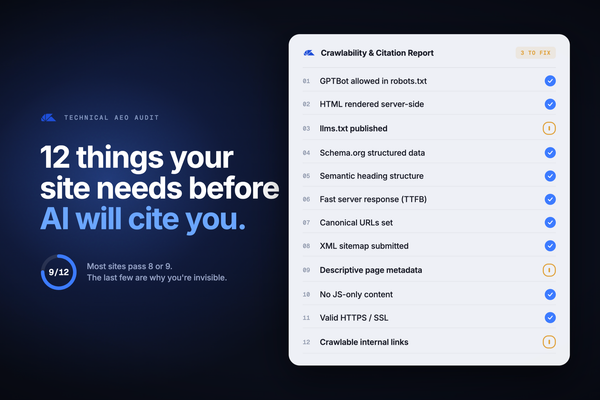
Schema markup is code added to a webpage that tells AI systems and search engines exactly what the content represents. For AEO, schema is a critical trust signal. Brands with comprehensive schema markup see 57% more AI Overview triggers on long-tail queries compared to those without it.
Relevant schema types for AEO include Article, FAQ, HowTo, Organization, and Person. Each provides structured context that makes it easier for an AI to confidently cite your content without risk of misrepresenting it.
3. Domain Authority and Third-Party Citations
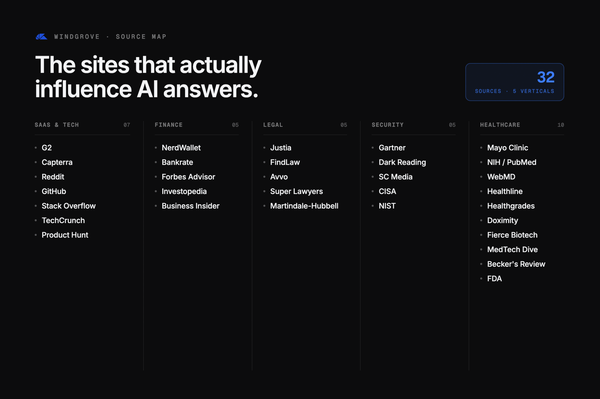
There is a strong positive correlation (0.65 linear correlation) between a website's overall authority and how frequently it appears in AI citations. This is not accidental. AI engines are trained to minimize hallucinations and errors, so they naturally favour sources that have demonstrated credibility across multiple platforms.
Third-party citations matter significantly:
47.9% of ChatGPT referrals come from Wikipedia
Reddit appears in 21% of Google AI Overview citations
LinkedIn accounts for 13% of Google AI Overview citations
YouTube appears in 13.9% of Perplexity citations
This tells us that AEO is not only about your own website. It is about building a presence across the platforms AI engines trust most.
4. Entity Consistency
AI engines build a model of who and what your brand is based on how consistently you appear across the web. If your company name, description, and area of expertise are described differently across your website, LinkedIn, industry directories, and press mentions, AI systems struggle to confidently include you in answers. Entity consistency means maintaining a coherent, unified description of your brand across every platform where you have a presence.
5. Topical Authority
AI engines favour brands that demonstrate deep, consistent expertise in a specific domain over generalists that cover everything shallowly. Publishing a cluster of well-structured, interconnected content around a specific topic signals to AI systems that your brand is a reliable authority on that subject, making you a safer citation choice.
AEO vs. SEO: What Is the Difference?
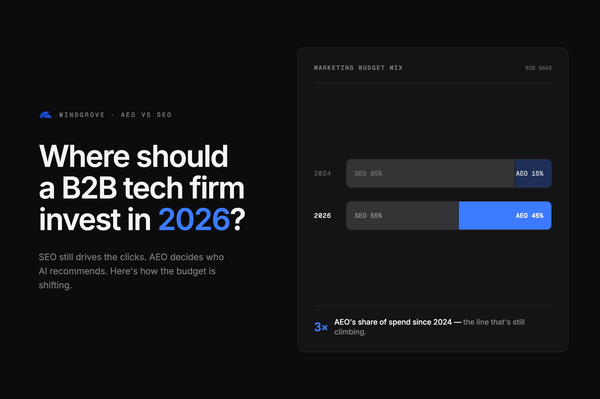
AEO and SEO are complementary disciplines, not competing ones. A strong SEO foundation, particularly domain authority and high-quality content, directly supports AEO performance. But the goals, tactics, and success metrics are distinct.
Dimension | SEO (Search Engine Optimization) | AEO (Answer Engine Optimization) |
|---|---|---|
Primary goal | Rank on a search results page | Be cited in an AI-generated answer |
Success metric | Rankings, organic clicks, impressions | AI citations, brand mentions in answers |
Content format | Keyword-optimized pages | Answer-first, structured, self-contained sections |
Key signals | Backlinks, page authority, technical health | Entity consistency, schema, topical authority, third-party citations |
Traffic type | Click-through from SERP | Direct referral from AI answer |
Buyer stage | Varies widely | Typically high intent, mid-to-late evaluation |
Ranking required? | Yes, by definition | No. Pages outside the top 10 can appear in AI answers |
The last row is worth emphasizing. Contrary to common assumption, a high Google ranking is not a prerequisite for appearing in AI-generated answers. AI systems surface the clearest, most contextually relevant answer regardless of traditional search position. A well-structured page on page two of Google can outperform a page-one result in AI citations if it is better formatted and more authoritative on the specific question being asked.
This creates a meaningful opportunity for businesses that have not yet built dominant SEO authority. AEO is, in many ways, a more level playing field, at least for now.
Why Businesses Need to Act Now
The AEO landscape is nascent, and that is precisely why timing matters. Early movers in any new visibility channel build compounding advantages that become increasingly difficult to displace.
The first-mover window is real. In traditional SEO, it took years for brands to accumulate the domain authority and backlink profiles that dominate today's search results. AEO is following a similar trajectory. The brands that establish topical authority, structured content, and third-party citation networks now will be the default recommendations AI engines serve to buyers in 12 to 24 months.
The Cost of Waiting
Consider what happens to a B2B service provider that delays AEO investment while a competitor does not. That competitor begins appearing in AI-generated answers to queries like "best [service type] firms for [industry]" or "how to choose a [service category] provider." Buyers receive that recommendation before they ever search Google, before they visit any website, and before a sales conversation begins. The shortlist is formed without the waiting brand ever having a chance to compete.
This is not a hypothetical future scenario. It is already happening across industries. Conductor's cross-industry analysis of over 3.3 billion web sessions found that AI referral traffic is growing by approximately 1% of total web traffic per month. The IT industry already sees 2.8% of all traffic arriving from AI referrals, with that figure rising monthly.
The Measurement Shift
AEO also requires a fundamental change in how businesses measure visibility. Traditional KPIs, including keyword rankings and organic impressions, do not capture AI citation performance. Brands investing in AEO need to track:
How often their brand is cited in AI-generated answers for target queries
The volume and quality of leads arriving from AI referral sources
Which content is being extracted and cited by which platforms
Brand mention frequency across ChatGPT, Perplexity, Google AIO, and other engines
This is a new measurement discipline, and building it early means having a benchmark before the channel becomes competitive.
How to Get Started With AEO
AEO does not require abandoning existing SEO or marketing investments. It requires extending them with a new layer of intent. The following steps represent a practical starting point for any business beginning to build AI visibility.
Step 1: Audit Your Current AI Visibility
Before optimizing, understand your baseline. Query the major AI engines directly with questions your ideal clients are likely to ask. See which brands appear. See whether your brand appears. This gives you a clear picture of the gap you are working to close and which platforms to prioritize first.
Step 2: Restructure Content for Answer Extraction
Review your existing content and identify pages that address high-value buyer questions. Restructure them to lead with direct answers, use clear heading hierarchies, and include FAQ sections that map to how buyers phrase their queries. Content that already ranks well on Google is often the best candidate for AEO restructuring, since it has existing authority that AI engines can build on.
Step 3: Implement Comprehensive Schema Markup
Add structured data to your key pages. At minimum, implement Article, FAQ, and Organization schema. If you have team profiles, add Person schema. Schema is one of the highest-leverage AEO investments because it directly reduces the ambiguity AI systems face when deciding whether to cite your content.
Step 4: Build Third-Party Authority Signals
Identify the platforms AI engines draw from most heavily in your industry and build a presence there. For most B2B service providers, this means:
A complete, keyword-rich LinkedIn company page and individual profiles for key team members
Listings on credible industry directories and review platforms
Contributions to relevant communities and publications that AI engines cite regularly
Consistent NAP (name, address, phone) data across all directories
Step 5: Track and Iterate
Set up a monitoring system to track AI citations for your target queries. Measure the volume and quality of leads arriving from AI referral sources. Use this data to identify which content is performing and where gaps remain. AEO is not a one-time project. It is an ongoing system of optimization, similar to how effective SEO has always worked.
The Bottom Line
AEO represents a fundamental shift in how businesses earn visibility, not a trend to monitor from a distance. The buyer journey is being compressed by AI-powered answer engines that form shortlists before a prospect ever visits a website. The brands being cited in those answers are winning opportunities they did not have to compete for in the traditional sense. The brands absent from those answers are being filtered out before the conversation even starts.
The good news is that the field is not yet saturated. Most businesses have not started. That creates a genuine first-mover advantage for those willing to invest in building AI visibility now, while the compounding returns are still accessible.
AEO is not about chasing a new algorithm. It is about building the kind of structured, authoritative, consistently presented brand that AI engines trust enough to recommend. That is a sound long-term investment regardless of how the technology evolves.
For businesses that rely on inbound discovery to generate leads, the question is no longer whether to invest in AEO. It is how quickly they can build the foundation before their competitors do.
Not sure where your business stands in AI search?
Most B2B companies have no idea whether ChatGPT, Perplexity, or Gemini are recommending them or their competitors. We audit your AI visibility in 30 minutes and show you exactly where you stand.